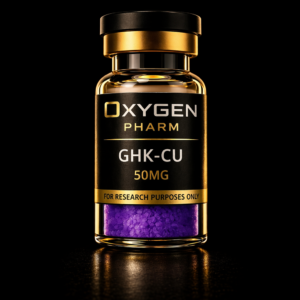
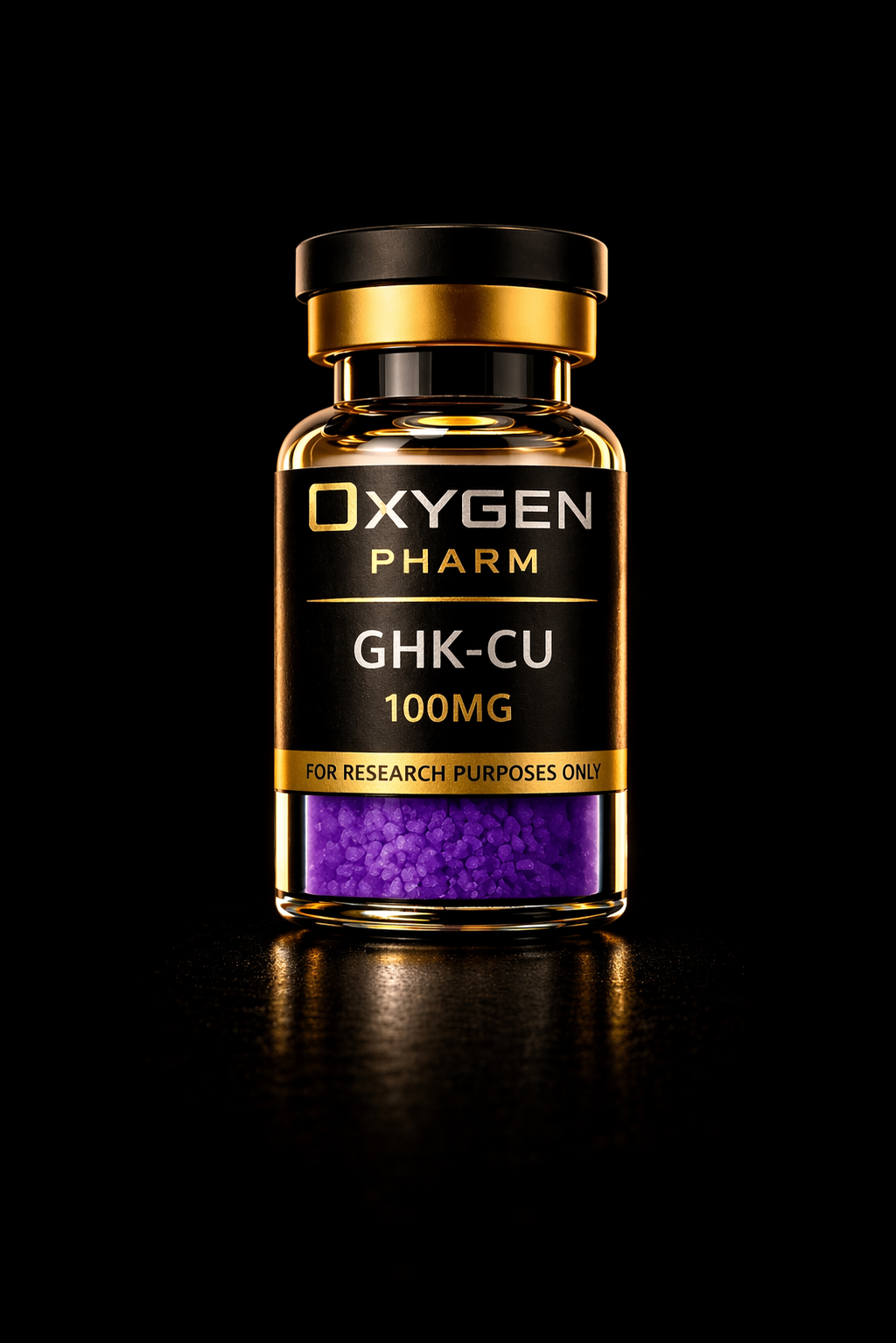
GHK-Cu (Copper) Peptide
Product Overview
GHK-Cu is a naturally occurring copper-binding tripeptide composed of glycyl-L-histidyl-L-lysine complexed with copper. It is widely studied in laboratory settings for its potential relevance to tissue repair, collagen-associated signaling, antioxidant activity, and gene-expression-related cellular recovery pathways.
Found endogenously in plasma and associated with injury-response biology, GHK-Cu has attracted significant scientific interest for its broad research profile across skin, connective tissue, wound-repair, and oxidative-stress models. It is frequently selected for experimental work involving extracellular matrix support, cellular remodeling, and recovery-focused signaling.
Research Profile
GHK-Cu is frequently studied for its potential involvement in:
- collagen-related repair pathways
- tissue remodeling and recovery
- antioxidant signaling
- inflammatory-response modulation
- extracellular matrix support
- gene-expression-related research
- cellular regeneration investigations
Researchers often examine GHK-Cu in laboratory settings to better understand how copper-associated peptide signaling may influence structural repair, oxidative balance, and broader cell-support mechanisms.
Mechanistic Interest in Research
GHK-Cu is commonly investigated for its ability to bind copper and participate in biochemical pathways associated with collagen synthesis, matrix remodeling, and cellular protection under stress. Research has also explored its possible influence on gene expression, oxidative stress markers, and signaling processes linked to tissue recovery and structural maintenance.
Because of this profile, GHK-Cu is often selected for research involving wound-healing models, fibroblast activity, antioxidant defense systems, and repair-oriented extracellular signaling.
Common Areas of Study
Tissue Repair Research
GHK-Cu is widely examined in studies involving tissue recovery, wound closure, and structural repair. It is often selected for experimental models focused on healing progression and regenerative support.
Collagen and Matrix Remodeling
Researchers often study this peptide in laboratory settings involving collagen synthesis, fibroblast signaling, and extracellular matrix organization.
Antioxidant and Oxidative Stress Models
GHK-Cu has also been investigated in research involving reactive oxygen species, antioxidant balance, and cellular resilience under oxidative stress conditions.
Inflammation and Recovery Signaling
Additional research interest has included inflammatory-marker modulation, immune-related signaling, and tissue response following injury or stress exposure.
Skin, Connective Tissue, and Ulcer Models
Because of its structural repair profile, GHK-Cu is frequently explored in studies involving dermal tissue, epithelial recovery, ulcer-related models, and broader connective tissue support research.
Chemical Information
Molecular Formula: C14H23CuN6O4
Molecular Weight: 340.38 g/mol
Also Known As: Glycyl-L-histidyl-L-lysine-copper 2+
Research Applications
GHK-Cu is commonly selected for laboratory work involving:
- collagen synthesis studies
- tissue repair and wound-healing models
- antioxidant pathway investigations
- extracellular matrix and fibroblast research
- inflammatory signaling analysis
- peptide-copper interaction studies
Important Notice
For Research Use Only.
This product is intended strictly for laboratory, analytical, and investigational use.
- Not for human consumption
- Not for veterinary use
- Not intended as a drug, food, or dietary supplement
- To be handled only by qualified professionals in controlled research environments