TB-500 Peptide
Product Overview
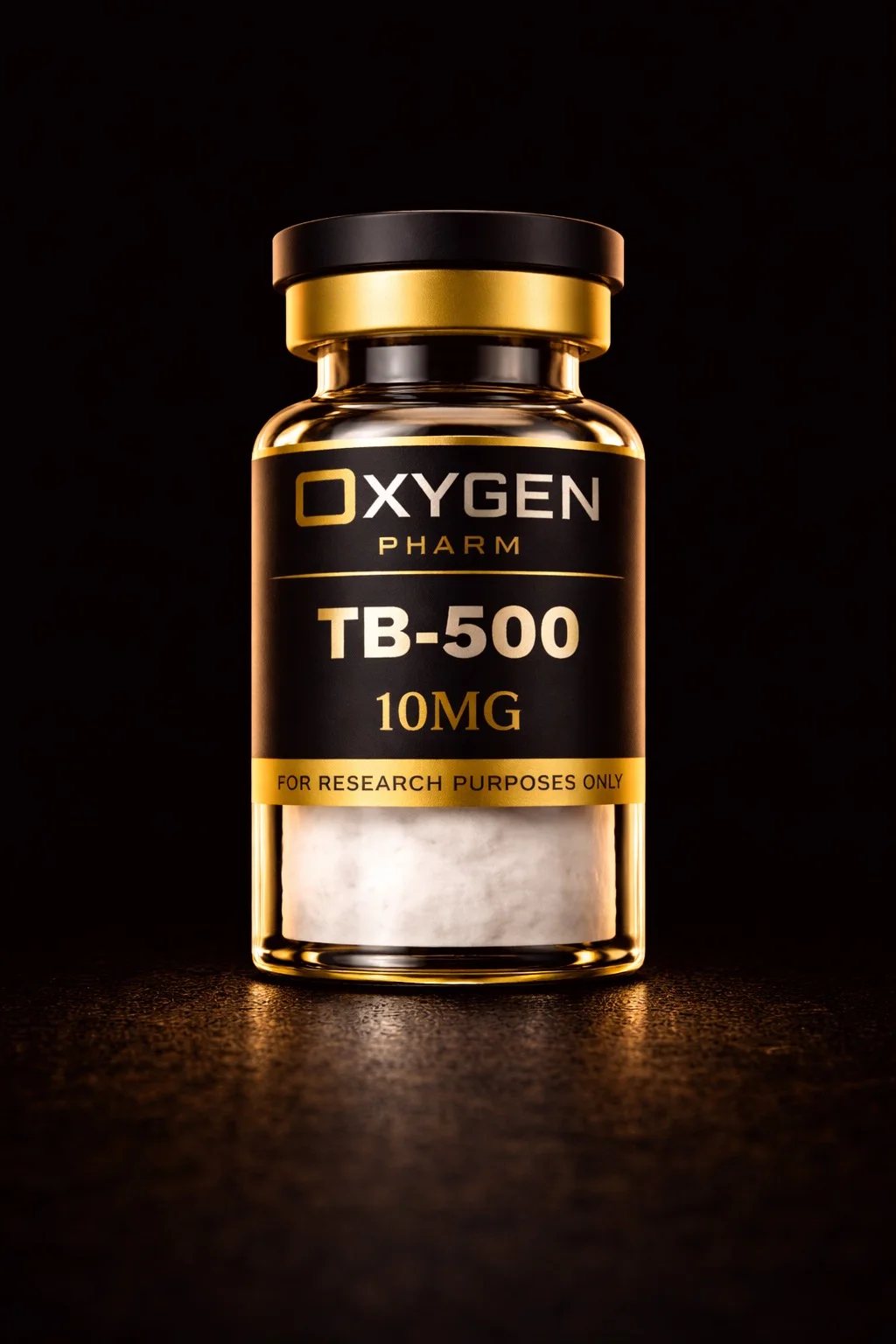
TB-500 is a synthetic peptide associated with thymosin beta-4 research and is widely studied in laboratory settings for its potential role in cell migration, tissue remodeling, angiogenic signaling, and structural recovery pathways. As a research compound modeled on the naturally occurring thymosin beta-4 sequence, TB-500 has drawn significant scientific interest in experimental work involving connective tissue, vascular response, and regeneration-focused cellular activity.
Because of its close relationship to actin regulation and tissue-repair biology, TB-500 is frequently selected for studies involving wound healing, musculoskeletal recovery, and coordinated cellular movement in damaged or stressed tissues.
Research Profile
TB-500 is frequently studied for its potential involvement in:
- cell migration and motility
- tissue remodeling
- angiogenesis-related pathways
- cytoskeletal organization
- connective tissue recovery
- inflammatory signaling modulation
- regeneration-focused investigations
Researchers often examine TB-500 in laboratory settings to better understand how thymosin beta-4-related peptides may influence structural organization, vascular response, and broader repair-associated cellular behavior.
Mechanistic Interest in Research
TB-500 is commonly investigated for its relationship to actin dynamics, cellular movement, and signaling pathways involved in tissue remodeling. Research has explored how this peptide may support cytoskeletal coordination, endothelial migration, and repair-associated signaling connected to vascular development and structural recovery.
Because of this profile, TB-500 is often selected for research involving motility-driven repair processes, angiogenic signaling, and tissue organization in experimental healing models.
Common Areas of Study
Tissue Repair Research
TB-500 is widely examined in studies involving wound-healing pathways, structural recovery, and tissue remodeling following injury or experimental stress.
Tendon and Ligament Models
Researchers often study this peptide in laboratory settings focused on connective tissue repair, collagen organization, fibroblast behavior, and mechanical recovery in ligaments and tendons.
Angiogenesis and Vascular Support
TB-500 has also been investigated in experimental models involving endothelial migration, new vessel formation, and pro-angiogenic signaling associated with tissue regeneration.
Muscle and Soft Tissue Research
Additional research interest has included muscle recovery models, soft tissue structural support, and broader musculoskeletal regeneration pathways.
Cellular Migration and Cytoskeletal Studies
Because TB-500 is closely associated with actin-related biology, it is frequently explored in research involving cell shape change, motility, and coordinated tissue-level repair activity.
Chemical Information
Molecular Formula: C212H350N56O78S
Molecular Weight: 4963 g/mol
Also Known As: Synthetic Thymosin Beta-4, TB-4
Research Applications
TB-500 is commonly selected for laboratory work involving:
- tissue repair and remodeling studies
- tendon and ligament research
- angiogenesis-focused investigations
- cell migration and motility analysis
- musculoskeletal recovery models
- thymosin beta-4-related signaling research
Important Notice
For Research Use Only.
This product is intended strictly for laboratory, analytical, and investigational use.
- Not for human consumption
- Not for veterinary use
- Not intended as a drug, food, or dietary supplement
- To be handled only by qualified professionals in controlled research environments