Semax Peptide
Product Overview
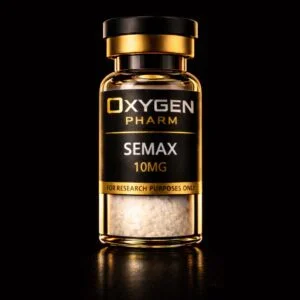
Semax is a synthetic peptide analog derived from an adrenocorticotropic hormone (ACTH) fragment, developed for laboratory research involving neuroendocrine signaling, central nervous system activity, and cognitive-response pathways. Structurally modified for improved stability, Semax has attracted significant scientific interest in experimental models focused on neuroprotection, neurotransmitter regulation, and peptide-mediated brain signaling.
Because of its engineered peptide sequence and research profile, Semax is commonly studied in laboratory settings involving brain function, stress-response signaling, and mechanisms related to neural adaptation and recovery.
Research Profile
Semax is frequently studied for its potential involvement in:
- neuroendocrine signaling
- central nervous system peptide activity
- dopaminergic and serotonergic regulation
- neuroprotective research
- cognitive-response pathways
- stress-related neural signaling
- gene-expression modulation
Researchers often examine Semax in experimental settings to better understand how synthetic peptide analogs may influence neurotransmitter systems, neural resilience, and broader brain-related signaling pathways.
Mechanistic Interest in Research
Semax is commonly investigated for its possible influence on neurotransmitter regulation, enkephalin-degrading enzymes, and neurotrophic signaling pathways. Research has also explored its potential relationship to dopamine activity, serotonin-associated signaling, and the modulation of factors such as brain-derived neurotrophic factor (BDNF).
Because of this profile, Semax is often selected for research involving neural communication, adaptive brain signaling, and peptide-mediated central pathway activity.
Common Areas of Study
Neuroprotection Research
Semax is widely examined in studies involving neuronal resilience, ischemic stress models, and broader investigations into protective signaling within the central nervous system.
Cognitive and Nootropic Models
Researchers often study this peptide in laboratory settings focused on memory, attention, focus-related response, and higher-order neural processing.
Neurotransmitter Regulation
Semax has also been investigated in experimental models involving dopaminergic and serotonergic activity, particularly where researchers are examining peptide effects on central neurotransmitter balance.
Stress and Behavioral Research
Additional research interest has included anxiety-related behavior, stress adaptation, and the potential effect of peptide signaling on emotional and behavioral response patterns.
Vascular and Neural Recovery Studies
Because Semax has been explored in models involving ischemic injury and vascular-related neural stress, it is also studied in connection with recovery-focused signaling in affected tissues.
Chemical Information
Molecular Formula: C39H54N10O10S
Molecular Weight: 854.99 g/mol
Also Known As: ACTH (4-7)PGP, HY-P1146
Research Applications
Semax is commonly selected for laboratory work involving:
- neuroendocrine pathway analysis
- neuroprotection studies
- neurotransmitter signaling research
- cognitive and behavioral models
- central nervous system peptide investigations
- gene-expression and neural adaptation research
Important Notice
For Research Use Only.
This product is intended strictly for laboratory, analytical, and investigational use.
- Not for human consumption
- Not for veterinary use
- Not intended as a drug, food, or dietary supplement
- To be handled only by qualified professionals in controlled research environments