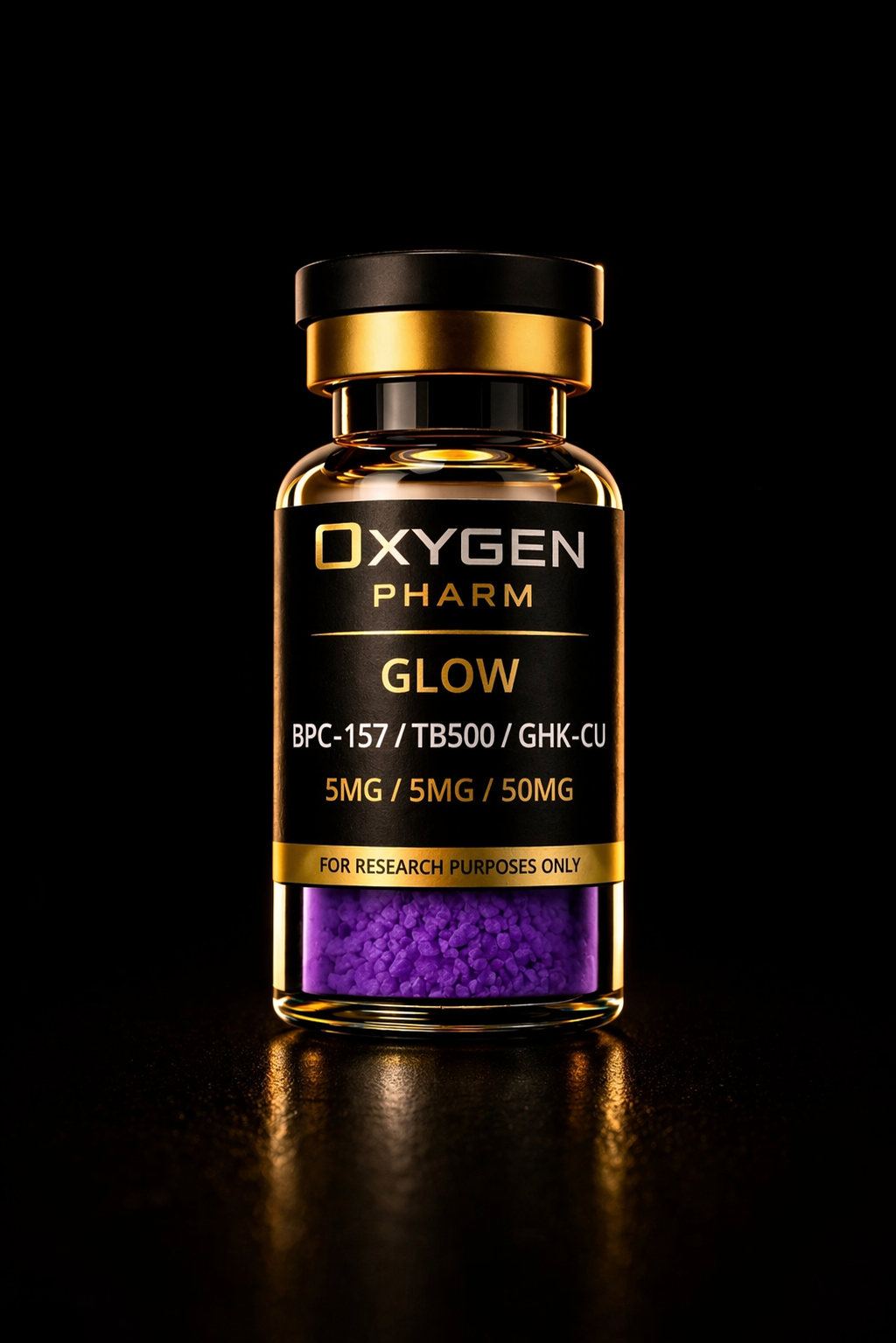
BPC-157 & TB-500 & GHK-Cu Blend
Product Overview
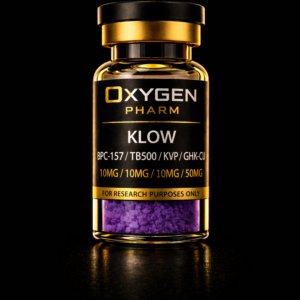
BPC-157 & TB-500 & GHK-Cu is a multi-peptide research blend developed for laboratory investigation into tissue recovery, angiogenic signaling, collagen-related repair, and inflammation-modulating pathways. This combination brings together three widely discussed compounds with overlapping but distinct research profiles in cellular regeneration and structural recovery models.
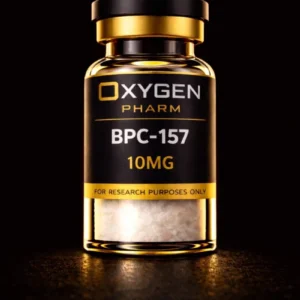
BPC-157 is a synthetic 15-amino-acid peptide commonly studied for its potential relevance to endothelial support, tissue repair, and inflammatory signaling.
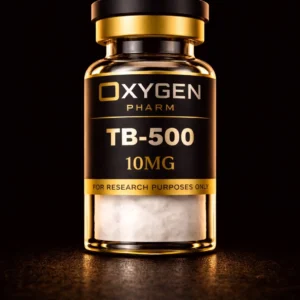
TB-500 is a synthetic analog associated with thymosin beta-4 research and is frequently examined for its relationship to cell migration, cytoskeletal organization, and vascular remodeling.
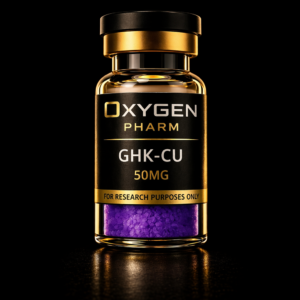
GHK-Cu is a copper-binding peptide complex studied for its involvement in collagen-related processes, antioxidant signaling, and recovery-associated cellular communication.
Together, this blend is often selected for research involving connective tissue models, vascular support pathways, and coordinated repair-related signaling.
Research Profile
BPC-157 & TB-500 & GHK-Cu is frequently studied for its potential involvement in:
- inflammatory signaling regulation
- angiogenesis-related pathways
- collagen support and matrix remodeling
- connective tissue recovery
- endothelial and vascular research
- cellular migration and structural organization
- tissue regeneration-focused investigations
Researchers often examine this blend in experimental settings to better understand how multiple repair-oriented compounds may interact across inflammation, vascular response, and extracellular matrix signaling.
Mechanistic Interest in Research
This blend is commonly investigated because each component appears to contribute to recovery-related research through a different but potentially complementary pathway.
BPC-157 is often studied for its relationship to endothelial stability, nitric oxide-associated signaling, and pathways linked to cell migration and vascular support.
TB-500 is commonly researched for its role in actin dynamics, cellular motility, and pro-angiogenic signaling associated with tissue remodeling.
GHK-Cu is frequently examined for its connection to collagen-related repair processes, antioxidant balance, copper-dependent signaling, and support of growth-factor-associated cellular activity.
Because of these differing profiles, the blend is often selected for research exploring multi-pathway recovery signaling rather than a single isolated mechanism.
Common Areas of Study
Inflammation and Recovery Research
This blend is widely examined in studies involving inflammatory signaling, immune-cell response, and tissue environments undergoing structural stress or damage.
Angiogenesis and Vascular Support
Researchers often study these peptides together in laboratory models focused on endothelial behavior, vascular formation, tissue perfusion, and pro-repair signaling associated with new vessel development.
Collagen and Connective Tissue Models
Because all three compounds are associated with structural repair research in different ways, the blend is frequently selected for investigations involving collagen organization, fibroblast activity, and extracellular matrix remodeling.
Tendon, Ligament, and Soft Tissue Research
This combination has also drawn interest in studies involving tendon fibroblasts, ligament recovery models, and broader musculoskeletal tissue response.
Cellular Regeneration Studies
Additional research interest includes cell migration, tissue remodeling, oxidative stress response, and support pathways linked to regeneration-focused experimental models.
Chemical Information
BPC-157 Molecular Formula: C62H98N16O22
TB-500 Molecular Formula: C212H350N56O78S
GHK-Cu Molecular Formula: C14H23CuN6O4
BPC-157 Molecular Weight: 1419.5 g/mol
TB-500 Molecular Weight: 4963 g/mol
GHK-Cu Molecular Weight: 340.38 g/mol
Also Known As:
- BPC-157: Body Protection Compound-157
- TB-500: Synthetic Thymosin Beta-4
- GHK-Cu: Glycyl-L-histidyl-L-lysine copper complex
Research Applications
BPC-157 & TB-500 & GHK-Cu is commonly selected for laboratory work involving:
- inflammatory pathway analysis
- angiogenesis-focused research
- collagen and connective tissue investigations
- endothelial and vascular signaling studies
- tendon and ligament recovery models
- multi-pathway regeneration and repair research
Important Notice
For Research Use Only.
This product is intended strictly for laboratory, analytical, and investigational use.
- Not for human consumption
- Not for veterinary use
- Not intended as a drug, food, or dietary supplement
- To be handled only by qualified professionals in controlled research environments